Harit Dhara, Saaf Vayu: Empowering Communities, Sustaining Lives
Harit Dhara, Saaf Vayu: Empowering Communities, Sustaining Lives
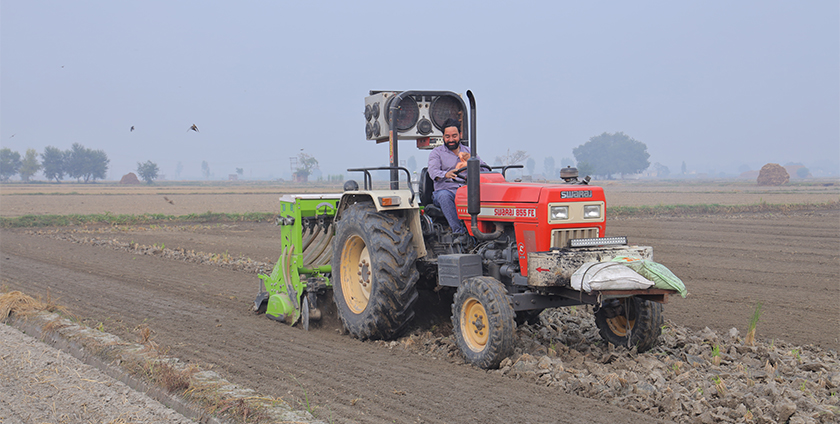
The program is dedicated to encouraging sustainable farming practices under the Rice-Wheat Cropping System (RWCS) in Jind district, Haryana. Its key focus areas include Crop Residue Management (CRM) and Direct Seeding of Rice (DSR), with the aim of reducing stubble burning through a collaborative and well-rounded approach.
The initiative involves active participation from various stakeholders such as the Department of Agriculture, Haryana, District Administration, Jind, Haryana State CSR Trust, Custom Hiring Centres (CHCs), and the farming community. Together, they work towards minimizing Active Fire Locations (AFLs) in the district, spreading awareness about the harmful effects of stubble burning, promoting eco-friendly residue management practices, and encouraging the adoption of DSR as a climate-resilient farming method.
Foundation for Development Initiative (FDI) has partnered with NatWest India Group, the Department of Agriculture, Haryana, District Administration, Jind, Haryana State CSR Trust, Custom Hiring Centres (CHCs), and Farmers.
To support these objectives, the program conducts stakeholder meetings, Focus Group Discussions (FGDs), farmer outreach activities, awareness campaigns, and one-on-one interactions. In addition, the Krishi Yantra Saathi mobile application is being utilized to improve farmers’ access to CRM-related services and resources.
Target Achieved under FY 25-26
Direct Seeded Rice (DSR) Demonstrations
- 192 demo plots established, leading to 228 adoptions implemented on 1086.5 acres.
- 3528 farmers participated in on-field demonstrations, covering 37,537 acres (15,197 hectares).
Crop Residue Management (CRM)
- 8,482 farmers with the land holding of 24,904 hectares engaged through the Krishi Yantra Saathi Application covered under CRM strategies.
- Out of this 4,629 farmers directly benefited, managing stubble across 15,190 hectares (215% higher than our initial target).
- Targeted Awareness Campaigns: Conducted 99 mega events, 785 FGDs, and 38,789 one-on-one interactions to drive behavioral change.
- Our team actively facilitated both in-situ and ex-situ stubble management.
Economic Impact
- DSR Input Savings: ₹3,631/acre.
- ROI (PB 1509): 142% DSR vs 133% TPR.
- Profit Improvement: ₹4,000–5,000 per acre.
- Subsidy Benefit Claimed: ₹5,000/acre (DSR + CRM combined) (further increased from this year).
- Stubble worth approx. 33.86 crores saved from burning @INR 1800/ton in 24,904 hectares.
Environmental Impact
- Water Saved: 25.25 crore litres via DSR
- Reduced Emissions: 2.05 lakh kg CO₂-equivalent.
- Methane Emissions Reduced: ~40–45%
- Soil Health: Moderate gains in organic carbon (from soil tests).