Blog Details
From Waste to Worth:
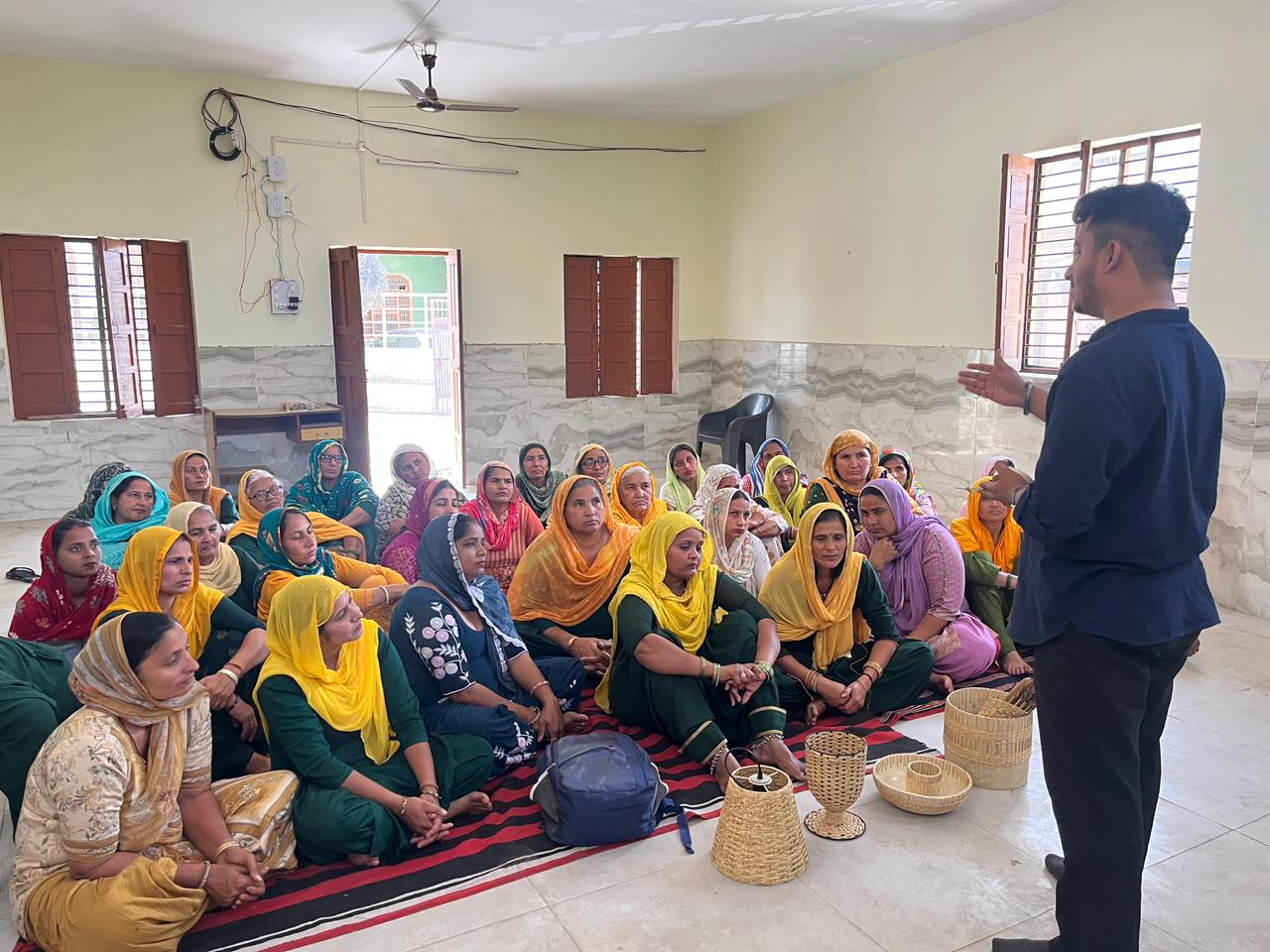
"Real transformation doesn't begin with products. It begins with people, conversations, and trust."When I first visited Mehlana village in Sonipat, we weren't carrying samples of finished products or talking about business opportunities. We were there to listen.
Before setting up the Mahila Kaushal Kendra, our team at the Foundation for Development Initiative (FDI) spent time understanding the community through baseline surveys and conversations with local women. We wanted to understand not just their skills but also their aspirations and whether they could truly see themselves becoming part of something new.
Like many farming communities across North India, Parali, or paddy stubble, was simply considered agricultural waste. Few imagined that the same material could one day become elegant home décor, handcrafted lifestyle products, or a source of livelihood. The idea sounded unfamiliar at first, but through conversations, demonstrations, and time, curiosity slowly began replacing hesitation.
As a Product Designer, I often found that the biggest design challenge wasn't the product—it was designing a process that felt familiar and comfortable for the women.
Instead of introducing complicated techniques, we observed the movements that already formed part of their everyday lives—braiding hair, rolling rotis, kneading dough, weaving, and tying ropes. Rather than asking the women to adapt to the material, we adapted the making process to the women. That simple shift changed everything.
Today, the Mahila Kaushal Kendra is much more than a training centre. It is a space where ideas are exchanged, skills are nurtured, and confidence grows with every new creation. Bundles of Parali that were once left behind in the fields are now carefully sorted, cleaned, and transformed into decorative lamps, candles, vases, keychains, home décor, and lifestyle products. Every product carries not only craftsmanship but also a story of environmental responsibility and collective effort.
One of the most inspiring aspects of working in Mehlana has been witnessing how learning became a shared journey. Every prototype became an opportunity to learn together. Some products needed stronger structures, others better finishing, while the material itself often behaved differently with changing seasons. The best ideas emerged through discussions between designers, trainers, and the women artisans, proving that innovation grows stronger when everyone contributes.
Working alongside women like Suman and Lalita Ji, I realised that the true transformation wasn't only happening in the products. It was reflected in their confidence to experiment with new ideas, master unfamiliar techniques, and support one another throughout the journey. The products they create today represent far more than craftsmanship—they represent patience, resilience, learning, and hope.
Sustainability is often discussed in terms of materials, but working in Mehlana reminded me that sustainability is equally about people. Giving a new purpose to Parali helps reduce crop residue burning and promotes a circular economy, but its greatest impact lies in creating opportunities, preserving skills, and enabling women to see themselves as skilled artisans contributing to a growing sustainable economy.
The journey at Mehlana continues to evolve with every new product, workshop, and conversation. What began with simple discussions has grown into a living example of how thoughtful design, community participation, and environmental responsibility can come together to create meaningful change.
As I leave the centre after every visit, I am reminded that the most rewarding part of this journey isn't seeing a finished product on the shelf. It is seeing the smile on a woman's face when she holds something in her hands and says, "We made this." Because in that moment, it is no longer just a product—it is confidence, identity, and possibility
About the Author
Gaurav Khatri
Product Designer & Researcher
Foundation for Development Initiative (FDI)
Working in these villages has changed the way I look at design. I realised that the biggest challenge wasn't creating new products it was creating processes that felt natural, familiar, and empowering for the women who would make them. These stories are drawn from moments I've witnessed in the field and are dedicated to the women whose hands, ideas, and resilience continue to transform agricultural residue into products with purpose.