Blog Details
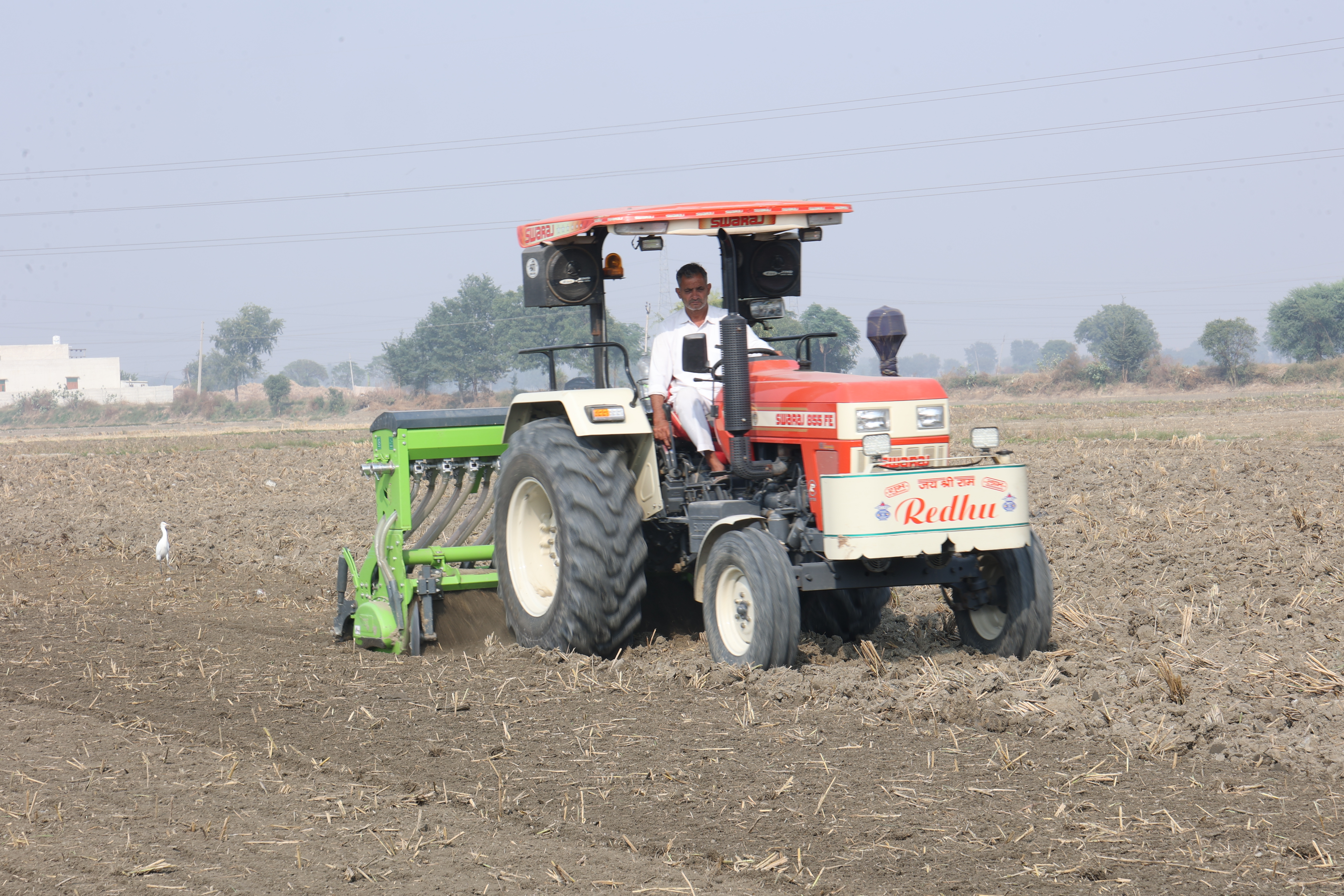
Every harvest season, millions of tonnes of crop residue are generated across India's agricultural landscape. For many farmers, disposing of this residue quickly remains a challenge, often leading to open-field burning. While this practice may appear convenient, its environmental, economic, and public health consequences are far-reaching.
Crop Residue Management (CRM) presents a sustainable alternative by transforming agricultural residue from waste into a valuable resource. Through improved farm machinery, in-situ residue management, composting, mulching, bio-based products, and value-added enterprises, crop residue can become a driver of environmental restoration and rural prosperity.
Sustainable residue management improves soil organic matter, conserves moisture, enhances nutrient recycling, and supports long-term soil health. Equally important, it contributes to cleaner air by reducing harmful emissions and protecting the health of rural and urban communities alike.
Beyond environmental conservation lies an even greater opportunity—livelihood creation. Across rural communities, crop residue is increasingly being transformed into eco-friendly products, handicrafts, decorative items, compost, and other marketable goods. Such initiatives create new income opportunities, particularly for women-led Self-Help Groups, while promoting circular economy principles.
Behavioural change remains at the heart of successful crop residue management. Awareness campaigns, demonstration plots, exposure visits, and continuous farmer engagement help build trust and encourage the adoption of sustainable practices at scale.
At the Foundation for Development Initiative (FDI), we are committed to working with farmers, government agencies, research institutions, and corporate partners to build practical, community-driven solutions that address environmental challenges while strengthening rural livelihoods.
Managing crop residue sustainably is not simply an agricultural intervention—it is a commitment to cleaner air, healthier soils, stronger communities, and a more resilient future.
About the Author
Bhoop Singh is the Director of the Foundation for Development Initiative (FDI). He provides strategic leadership for programmes focused on sustainable agriculture, environmental conservation, rural livelihoods, and community development. With decades of experience in programme management and partnership building, he is committed to creating scalable, community-led solutions that generate lasting social and environmental impact.